
Rising costs, labor shortages, and increasingly time-critical demands – logistics is under more pressure today than ever before.
Traditional automation often reaches its limits, but industry 4.0 offers new answers: robotics and artificial intelligence make processes more flexible, efficient, and resilient.
Logistics 4.0 is therefore no longer a distant vision of the future – it’s the prerequisite for staying competitive and already a reality today. Let’s take a closer look at what defines Logistics 4.0 and which technologies dominate it.
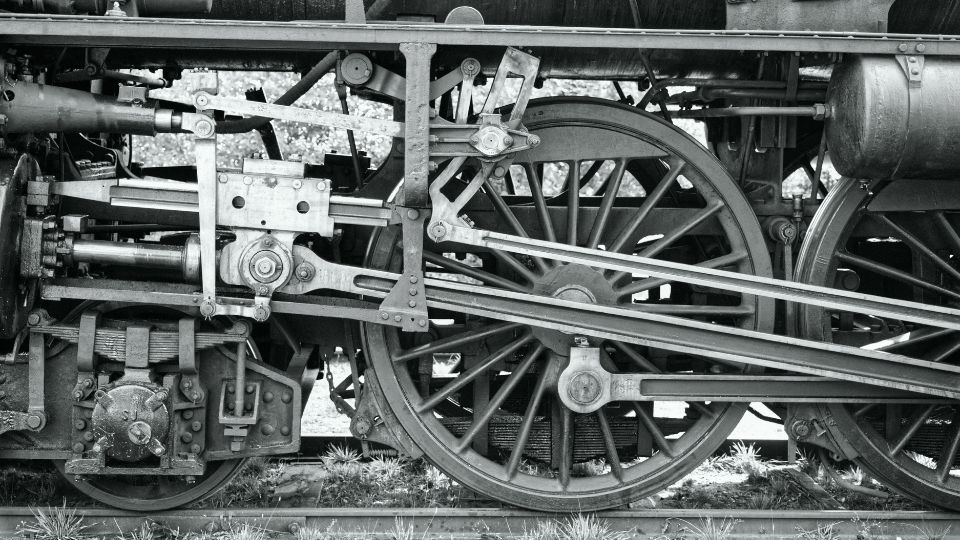
Logistics has evolved in step with industry: with Industry 1.0 came the first transports and storage structures, with Industry 2.0 followed railways, steam-powered shipping, and standardized flows of goods. Industry 3.0 introduced computers, containerization, and the first automated storage and conveyor systems – the foundation of today’s supply chains and parcel logistics.
Logistics 4.0, finally, stands like Industry 4.0 for data-driven systems, AI, robotics, and digital connectivity – not only in transport but also in intralogistics, for example.
👉 Logistics 4.0 is therefore not just a sci-fi concept, but the logical continuation of a 200-year evolution – and the logistics of the industrial phase we inevitably live in today.
Robotics and artificial intelligence are at the core of Logistics 4.0. They take automation to a new level – not just faster, but smarter. Modern systems can, thanks to AI, learn independently, adapt to new situations, and reliably manage complex processes.
Step by step, logistics is transforming:
👉 These developments show: AI-powered robotics is transforming not just individual operations, but entire value chains – from inbound goods to final delivery.
.jpg)
Robots are learning – through deep learning and neural networks – to handle diverse objects, materials, and situations flexibly, without rigid programming.
For example, industrial robots equipped with a robobrain® can independently and reliably sort products and place them on conveyor belts – regardless of shape, color, material, or whether they arrive in order or as bulk goods.
New intelligent grippers imitate the processes of the human hand: they handle objects of different shapes, sizes, and materials – from boxes to delicate food items. New materials and manufacturing technologies enable highly integrated, high-performance grippers for industrial use.
For example, grippers we develope for parcel logistics can pick shipments regardless of whether they weigh 100 g or 32.5 kg, measure 10 cm or 1 m, come in a box or a bag, or even in a reusable crate.
From driverless forklifts in warehouses to autonomous trucks on highways – self-driving systems are revolutionizing transport and intralogistics.
For instance, large logistics centers are already using autonomous forklifts that automatically store and retrieve goods from shelves. Pilot projects with autonomous trucks also show how long-distance transport could soon be managed without drivers.
By analyzing vast amounts of real-time data from connected sensors, supply chains can be predicted and optimized, and processes can be controlled directly on-site and in real time. With digital twins, entire factories are mirrored virtually to simulate processes and detect failures early.
Examples include sensor networks in cold chain logistics that monitor temperature and location in real time, or digital replicas of production lines used by companies like Siemens or BMW to predict bottlenecks and avoid downtime.
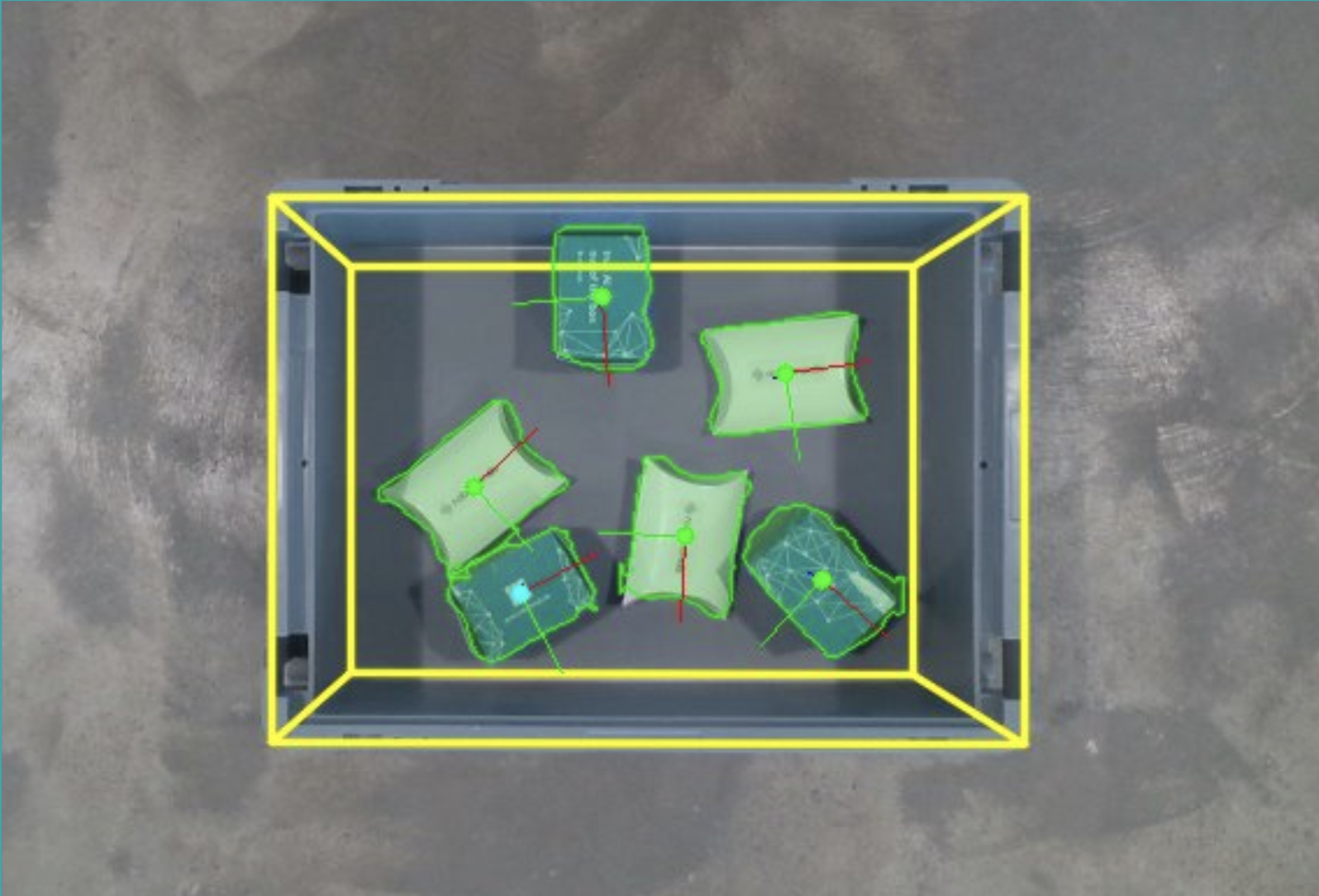
Industry 4.0 isn’t just being discussed – it’s already being implemented. For example, here in Munich at robominds: with the robobrain® - as AI control - and modular AI skills, industrial robots are enabled to pick flexibly, make situational decisions, and safely handle even unstructured objects.
Whether flexible order picking or customized handling in production – we demonstrate how the core principles of Industry 4.0 (connectivity, AI, flexibility) can be applied in practice.
We implement AI robotics solutions using digital twins: virtual replicas of robots that learn tasks before transferring the acquired AI to real robots.
.png)
Logistics 4.0 is no longer just a buzzword – it’s the answer to rising costs, labor shortages, and volatile markets, and it’s already reality. AI and robotics are the key technologies that not only make processes more efficient but also make companies as a whole more resilient.
For this future to work, we need systems that make industrial robots flexible and adaptive. This is exactly where robominds comes in with the robobrain®: from cross-industry bin picking to automated parcel singulation, our solutions show how the principles of Logistics 4.0 can be put into practice.
👉 Anyone who starts thinking about AI robotics today is laying a solid foundation for logistics that can thrive tomorrow.