
“Physical AI” is on everyone's lips. But is it just another meaningless buzzword, or the next big revolution in robotics? At robominds, we’ve been developing “physical AI” for almost a decade — so let’s take a closer look at what the trend really means.
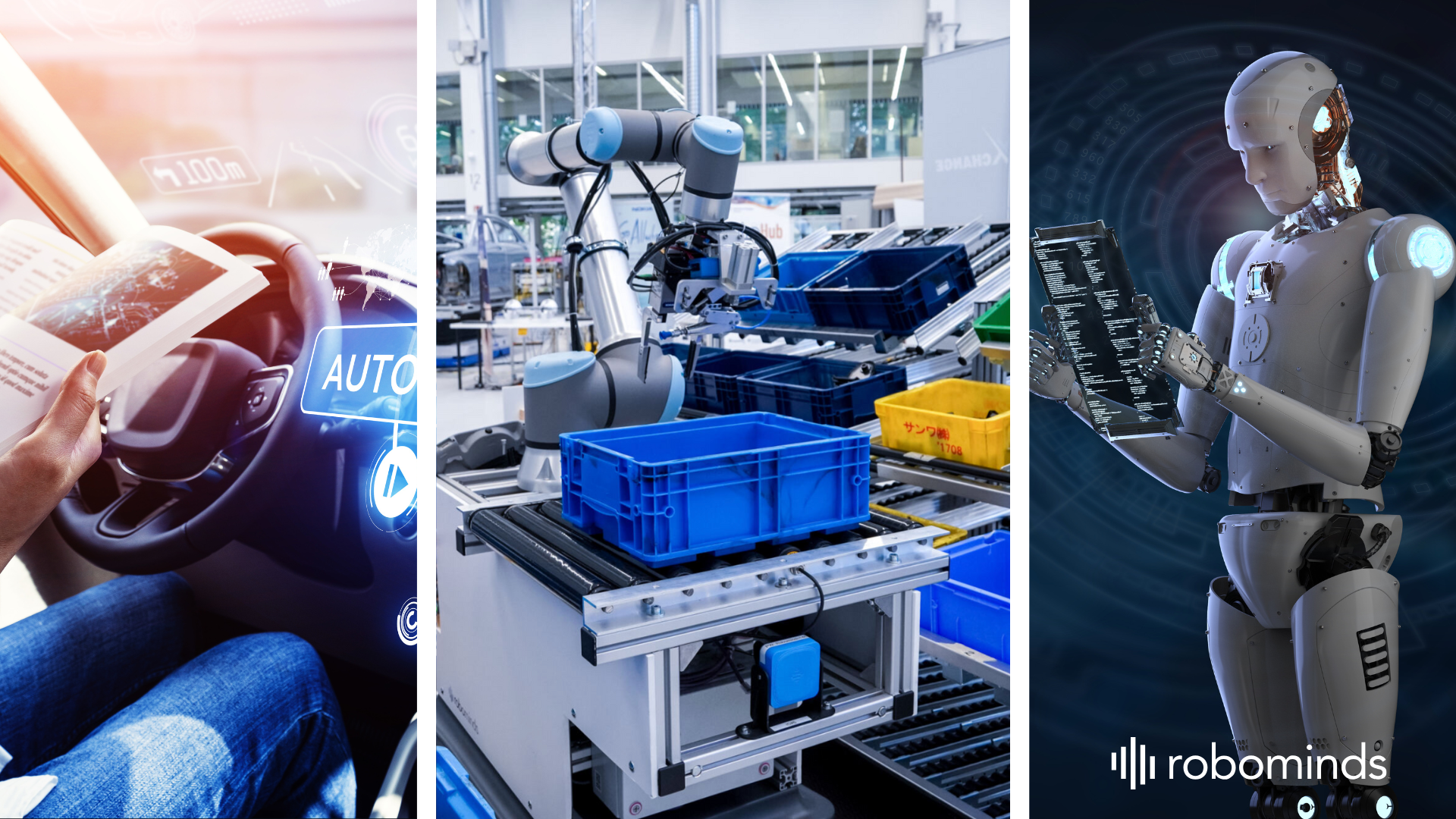
Physical AI goes beyond pure data processing. It understands spatial relationships, interprets sensor data, and actively interacts with its environment. AI robotics, as we develop it at robominds for industrial use, is one part of the field. Another example is autonomous driving.
The goal of Physical AI is to create machines that don’t just run a fixed program like traditional industrial systems, or merely think and speak like avoice assistant, but act — precisely and safely in the real world.
In other words: AI is moving from the digital into the physical space.
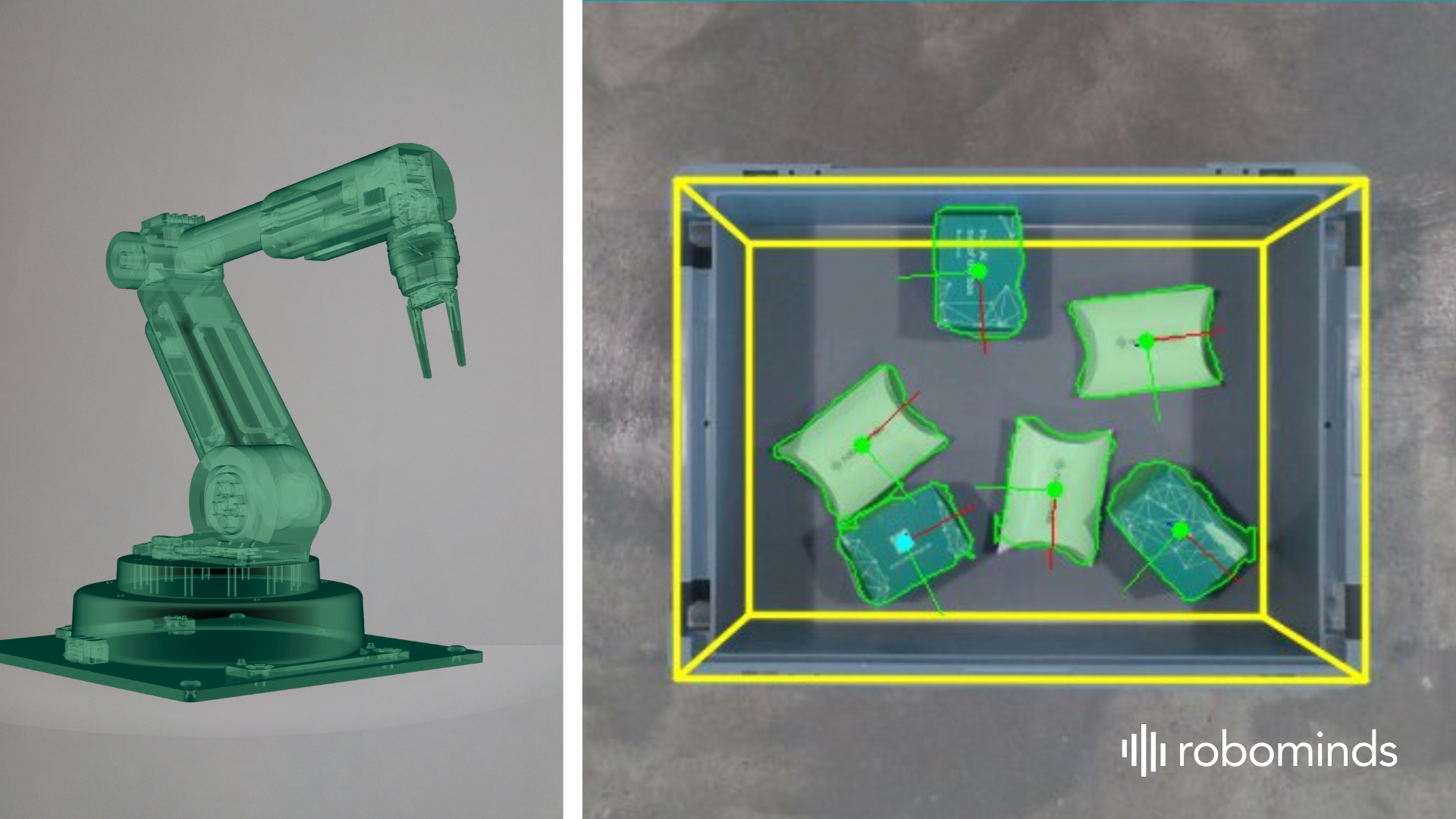
Multi-axis robots, like the ones we use at robominds, need to be trained in order to use Physical AI effectively. This training relies on digital twins and realistic simulations.
The machine and its environment are virtually recreated with all their physical laws and specifications. The digital twin can then learn — for example through reinforcement learning — how to move without colliding, how to execute desired actions, and how to react to different scenarios. This way, AI can test countless situations without risk, while protecting the real robot from damage. Once the digital twin has gained enough knowledge, the data is transferred to the physical robot.
To make these processes reliably usable, we at robominds have conducted extensive fundamental research in recent years and developed our own technologies. This expertise is protected by a patent that we have successfully filed and had granted.
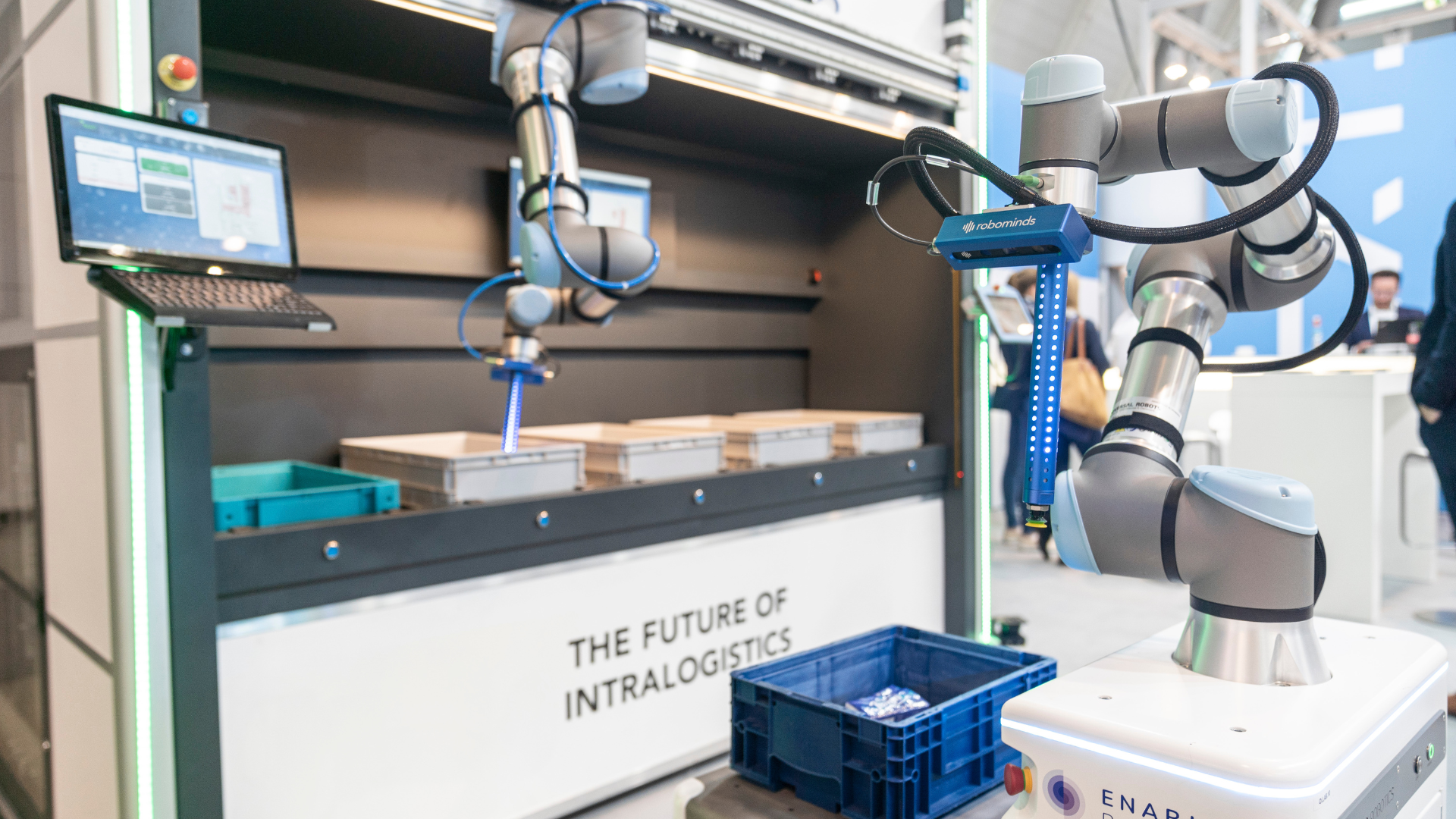
At robominds, we have been developing “brains” for robots - the robobrain® - for almost ten years. In other words, we build the software that enables robots to act intelligently. Robots equipped with the robobrain® don’t just execute rigid programs. They can make decisions and adapt to their context. Physical AI gives them situational awareness.
In practice, this means they can:
Put simply: Physical AI allows us to automate processes that once seemed nearly impossible to automate — including tasks requiring force sensitivity or hand-eye coordination.
Research at robominds, as well as internationally, is advancing at full speed to improve the real-time performance of robots. The vision: robots that not only react to countless scenarios faster than ever before but also learn new skills in real time. Today, robots still need to be trained in advance. Tomorrow, they will be able to analyze the data they collect while working, use it for on-the-fly training, and continuously optimize themselves.
In the coming years, we expect a massive increase in the use of AI robotics in logistics, manufacturing, and production. More companies will deploy robots, more workers will collaborate with them, fewer heavy loads will need to be lifted manually, and robots will become faster, easier to program, and safer.
While much of the public attention is drawn to humanoids and service robots, we are at the forefront of the fast-moving development of industrial robotics in production and logistics — a field that will shape our industry and society just as profoundly.